On each of the upcoming pages you will find links to my podcast episodes in the episode headings, followed by brief episode descriptions. Click on each episode title to access the audio. After listening, you can read my corresponding scholarship, here.
Episode 1: Welcome to What Is YA Anyway?
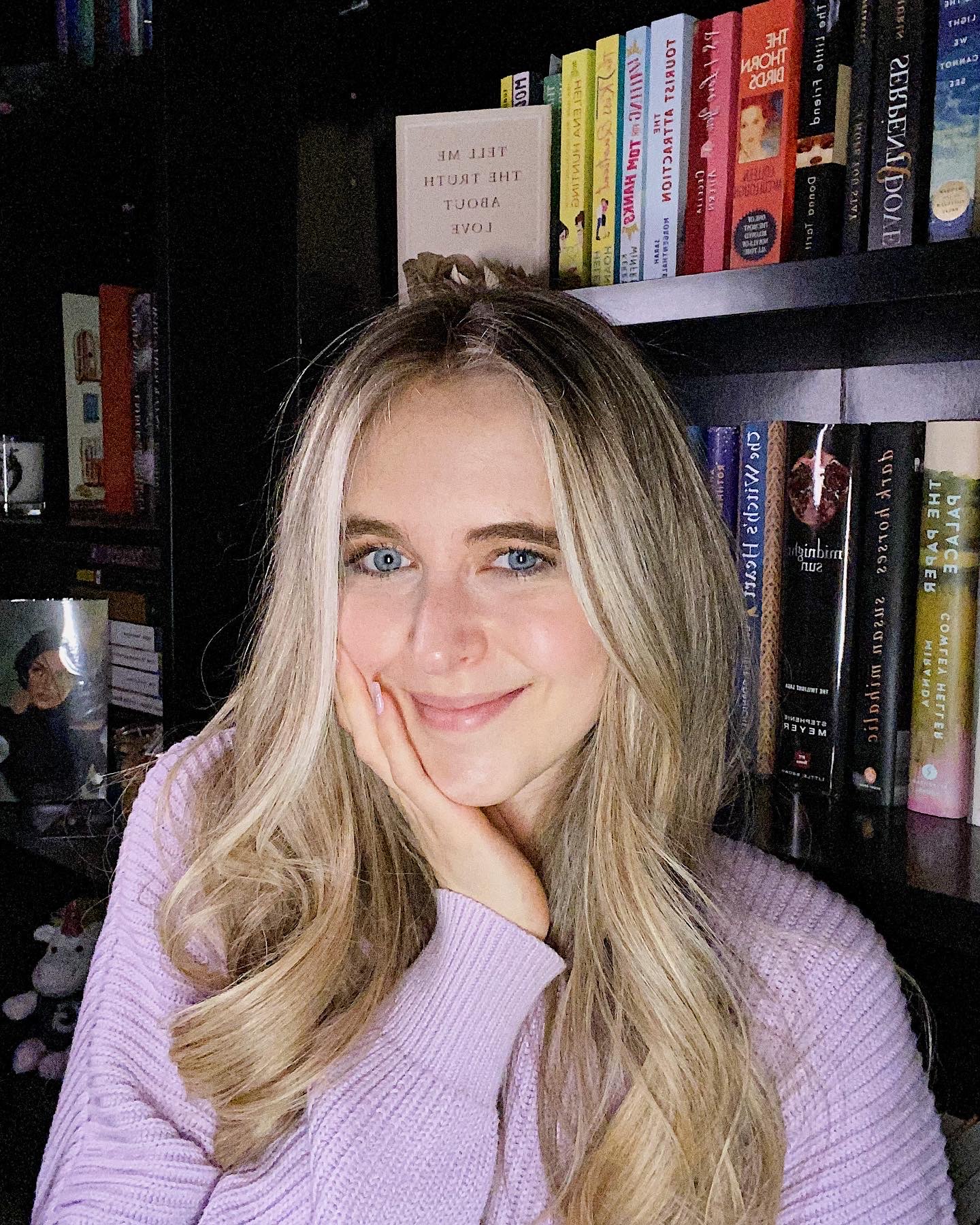
I’m your host Emma, and I’m so happy to have you here. Now, let’s talk all things Young Adult literature.
A Brief Story
I was fourteen the first time I felt shame about reading a book. The newest installment of The Shadowhunter Chronicles had just come out, and I was entranced. This series of books captured my attention unlike any other, and my heart ached to know that it was coming to a close.
I had ten pages left when John arrived and was shocked when he had the audacity to enter my reading room… while I was reading. I held up my finger to indicate, Just one minute, but what I really meant was: Don’t disturb me; I’m five pages away from having a mental breakdown… I mean finishing this book.
When I shut the cover, he asked, blasé, “How was it?”
I launched into a bookish diatribe; his question unlatched the floodgate and every emotion poured out of me. I was so excited to talk to someone about this book I loved.
Right in the middle of my explaining how devastating it was that Simon would never get his full memory back, John cut in: “Please, stop talking. You’re acting ridiculous. It’s just a book, and it’s not even good.”
I felt like someone slapped me. “Have you read it?”
“No.”
“Then, how do you know?”
Then he said words I will never forget: “Because it’s just a stupid Young Adult book.”
I never brought up my stupid Young Adult (YA) books again.
Entering college as an English major, I was excited at the prospect of finding a vibrant, excited, engaged group of YA-loving scholars. But I did not find that. Instead, I found silence on the topic. I heard none of the scholarship being done on these books.
I wonder how my conversation with John might have been different had I known that while he was branding my YA book as “stupid,” there was a cohort of scholars—albeit small and under my radar—doing groundbreaking research. I wonder how my undergraduate years would have been different had I actively participated in the growing academic conversation on YA. What if I could have answered questions like: Why has YA so often been overlooked by scholarship that could learn from it? What can we learn by giving this category the critical attention it deserves? What work do these books do in the world? What do we miss out on by dismissing YA? And what is YA anyway?
It is from these questions that my podcast, What Is YA Anyway?, was born.
What Is YA Anyway? is a limited series podcast with a dozen episodes lasting roughly 40-60 minutes in length. Through candid conversation with YA’s meaning-makers—its Scholars, Authors, and Readers—What Is YA Anyway?presents a detailed take on what makes YA, YA through the lens of those who know it best. I chose the podcast format because its dialogic nature mimics the entertaining accessibility of the category. It also allows me to illuminate my interviewee’s firsthand knowledge in intimate and immediate ways that cannot be achieved through more solitary scholarship. Moreover, the real-time feel of the conversations within my research adds exigency, highlighting why we must pay more attention to and learn from these books. This category has much to teach about the untapped applications of YA in literary analyses, YA author’s written craft, and YA’s power to shape and change cultural landscapes.
The episodes and corresponding research I present aim to show that the complex nature of YA demands it be paid critical attention and be defined by more than an age rage. Adopting an incomplete definition based solely on age range and outdated biases does not help answer the questions about YA, nor does it adequately represent the category. Instead, I argue that a definition of YA must consider these factors: the category’s history in publishing, scholarship, and pedagogy; its specific craft choices; and its readership in a way that is not constricted to an age range. Arrival at this definition provides an understanding of the complex role YA has come to occupy in the literary marketplace and proves YA a fruitful field for scholarly inquiry as well as an important cultural touchstone whose sphere of influence may start with the youth but reaches far beyond.
Why a Podcast?
One of the biggest draws of podcasts is their ability to educate entertainingly and engagingly; they, much like YA, are accessible to a broad audience. Therefore, it seemed only natural to use podcasting as the vehicle for my project. Moreover, the conversational nature of the podcast allowed me to achieve the same immediacy and intimacy characteristic of YA stories.
After reaching out to guests, I drafted questions to guide my thinking; however, I let the conversation take a natural shape and be an authentic discussion rather than a scripted performance. Therefore, I did not stick to my questions verbatim but used them as a preparation guide. Each participant was also asked to fill out a consent form that confirmed their permission to record, release, market, and use the content in accordance with the goals of my thesis. I began the interview process with scholars because I knew these conversations would help inform my later questions for authors and readers. In these conversations, I learn as I listen, just like each of my listeners. I reached out to seven academics and received four agreements: Chris Crowe (Brigham Young University), Jon Ostenson (Brigham Young University), Robert Petrone (University of Missouri), and Roberta Trites (Iowa State University). In the following section of this paper, I explain how their scholarship studies, understands, and creates the history YA.
I sent out dozens of pitches to authors. Of the over two dozen pitches, I received four agreements, three declines, and the rest went unanswered. The author guests on my show are: Gayle Forman, Rachel Lynn Solomon, Christine Riccio, and Ebony LaDelle. While I did reach out to a diverse group of authors, men and women, my guests were all women; however, this is representative of the category, which is primarily written by and directed to females, a topic I discuss at length. I apply my conversations with authors to draw a picture of YA as a craft-intensive form.
My final round of interviewees were the readers. I reached out to a handful of YA content creators on Instagram, work colleagues, and students within the Georgetown graduate program. I was not able to have guests under eighteen due to legal restrictions. What Is YA Anyway? includes three conversations with readers and applies a reception theory lens to understand the power of fans to influence culture and how YA can be understood as a cultural touchstone reflecting societal interests and concerns.
Let us now turn our attention towards developing an understanding of what YA is anyway.
Head to Chapter Two: The Scholars.
 Emma Louise Books